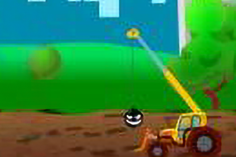
The Adventures Of One Button Bob
With the release of the iPhone in 2007 and shortly after the opening of the App Store in 2008, touch screens became mainstream and many game developers began exploring the concept of “one button” gameplay mechanics.
Game designers experimented with simple games that could be played with just a tap/mouse click anywhere on the screen, or on just one button (or one finger) input. This lowered barrier to entry, made games more accessible and suitable for short sessions (for one-handed play while on the bus, waiting etc). This imposed serious design constraints considering how game design traditionally had the luxury of keyboards, cursor or direction pads, joysticks, multiple controller buttons, etc. Now in the “one button” mechanic paradigm each screen or situation needed to have clear meaning for that single input, and variation came from when and how you pressed rather than multiple dedicated inputs.
Early examples (besides One Button Bob) include simple runner/arcade games, flipping between states, timing-based games and also mobile ports of simpler games. Some Flash games were already doing this even before or during the early iPhone era but experimentation and discussion really ramped after the launch of the iPhone. The one-button or one-touch paradigm became a big part of what would later be called the “casual” or “hyper-casual” style.
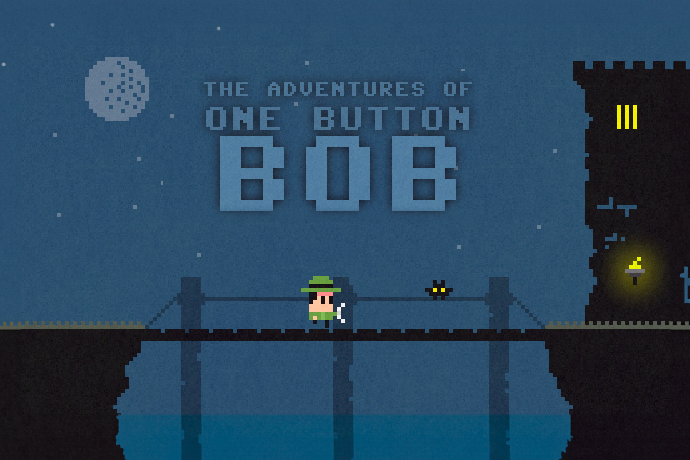
In One Button Bob, Ninja Doodle took exploration of the one-button mechanic to extremes by changing the action in every level! So it’s up to you to figure out what to do and get Bob to the screen exit and ultimately the treasure!
How many clicks will it take you?